Texas has introduced some of the most stringent network adequacy requirements in the country, reshaping how health plans design, monitor, and report on provider networks. Join expert Stephanie Stephens, a former Texas regulator, as she sits down with the Quest Analytics team to unpack HB 3359, explore compliance best practices, and look forward to national trends and the changing landscape to evaluate network access, network adequacy, and provider directory accuracy.
1. Data Accuracy Is Becoming a Measurable Compliance Expectation
Emerging policy initiatives across federal and state agencies are introducing measurable benchmarks for provider data accuracy and network adequacy. According to Snyder, “In 2025, and the year isn’t even over yet, we’ve already identified over 70 policy initiatives related to network adequacy across the country. More than 20 have become law, and Texas is no exception.”
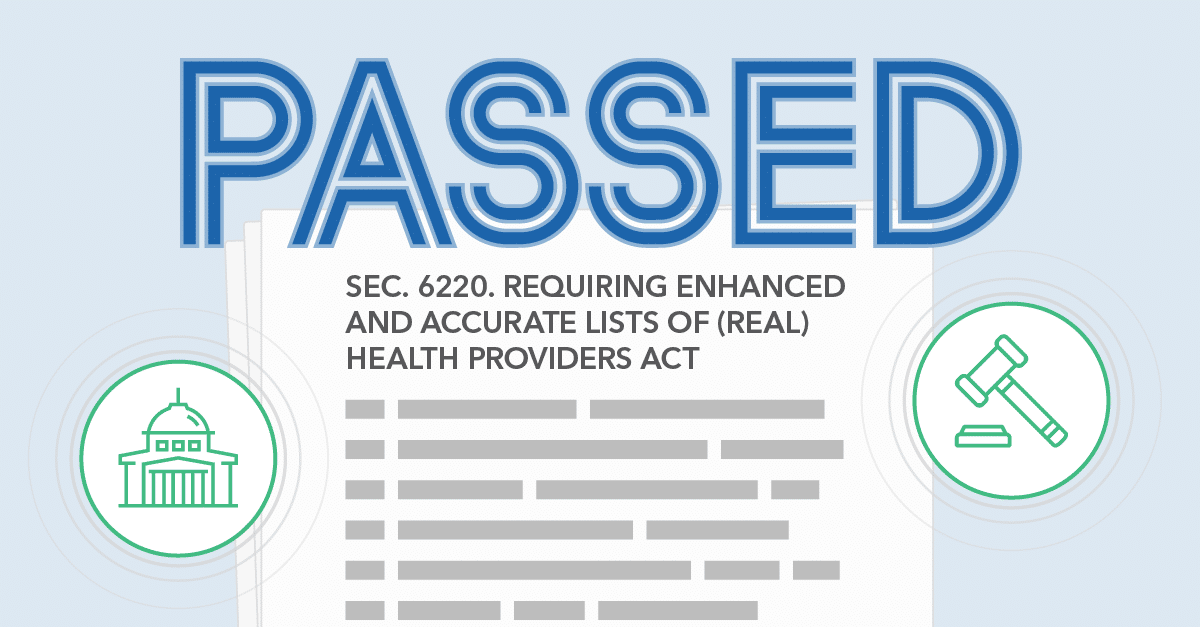
With federal actions like CMS’s Medicare Advantage 2026 Final Rule and the proposed Requiring Enhanced and Accurate Lists of Health Providers Act (REAL Health Providers Act), health plans are facing new expectations for public accountability. Requirements such as annual provider data submissions and public accuracy scoring underscore the need for health plans to maintain transparent and reliable data.
“What we see across the country is definitely true in the state of Texas,” noted Snyder. Texas regulators, including the Texas Department of Insurance (TDI) and the Texas Health and Human Services Commission (HHSC), are modernizing approaches to data collection and oversight that align with broader national priorities while improving transparency.
2. Automation Replacing Manual Attestations
Another trend is the shift from manual attestations by health plans toward automated systems and direct validation. This transition aims to address inefficiencies, reduce administrative burdens, and promote innovative approaches to data management and oversight. Federal initiatives like the National Directory of Healthcare (NDH) pilot, led by CMS’s Center for Consumer Information and Insurance Oversight (CCIIO) and Office of Healthcare Experience and Interoperability (OHEI), push for direct provider validation within the Exchange program. Broader federal priorities, including Transparency and Interoperability, are promoting alignment across multiple federal regulatory systems.
Snyder noted, “The trend is unmistakable to me. Provider data accuracy and network adequacy are converging into a framework that includes adequacy for time and distance, access metrics like wait times, and provider directory accuracy.”
In Texas, TDI, while aligning with federal time and distance standards, has introduced additional requirements, such as validating provider facility affiliations to ensure in-network specialists can admit at in-network facilities.
For Texas Medicaid, compliance measures include appointment wait time tracking and the use of secret shoppers.
These advancements highlight the need for health plans to implement automated, validated, and auditable data systems as foundational tools for meeting regulatory requirements effectively.
3. Collaboration Between Health Plans and Regulators
Effective collaboration between health plans and regulators is increasingly fundamental to improved alignment and streamlined compliance. Stephens emphasized that transparency fosters productive dialogue between these stakeholders, stating, “There’s an opportunity for more transparency on both sides — regulators and health plans — working together to develop the right standards.”
Drawing on her experience as Medicaid Director, Stephens noted that health plans often have deeper insight into overlapping requirements across commercial insurance, Medicare, Exchange programs, and Medicaid. Health plans are uniquely positioned to help regulators identify redundancies and explore efficiency improvements by aligning regulatory expectations.
“We all want this to be as efficient as possible, for there to be alignment where that makes sense, and I think that’s an important role health plans can play,” Stephens explained.
Snyder supported this perspective and urged health plans to proactively connect with regulators early and often, whether developing new networks or modifying existing structures. Clarity on efforts that benefit consumers and align with regulatory frameworks positions health plans as trusted partners in the policymaking process.
4. Role of Technology For Oversight and Health Plans
Regulators are beginning to explore the potential of emerging technologies, such as artificial intelligence (AI), to streamline oversight and compliance processes. AI holds promise in processing large datasets and distilling actionable insights that benefit both regulators and health plans. Stephens emphasized this point, stating, “There has to be technology that is helping states and health plans make sense of the data — find the trends, find the issues, and pull those out and highlight them. It’s great to have data, but at the end of the day, it has to be actionable. I think that’s where the technology — and hopefully AI come in — making that data more actionable.”
As regulators enhance their modernization efforts, health plans that adopt technology-driven solutions will gain a competitive edge in meeting ever-evolving regulatory benchmarks while delivering improved outcomes for their members.
Proven Solutions for Your Provider Network Management
Looking to simplify your workload? Let Quest Analytics take on the heavy lifting! Our solutions and dedicated team specialize in provider data accuracy and provider network adequacy for various lines of businesses, including Medicare Advantage, Medicaid and Commercial. Schedule a strategy session today and see how we can help you every step of the way.